Seedcraft Artdump
Posted
Another Jam project, this time entirely focusing on plant growth as a system that can be played with. We brought plenty of initial ideas for gameplay, but ended up deciding that a toy would be the best approach for trying to have a space to deal with plant growth.
This prototype is called Seedcraft, it can be played on the browser, and lets you plant seeds, and design seeds based on plant behaviours. It was done as part of the One Game a Month #56 Jam.
Everything for this game needed to be simpler, because the system was going to be a lot more complicated than with our previous attempt. I am not particularly happy with how things look, but soon after we began I realized that making varied plant modules that players would stitch together would look weird and alien. So I tried to go with the flow and make things weird and alien (kept looking at Scavengers Reigns)
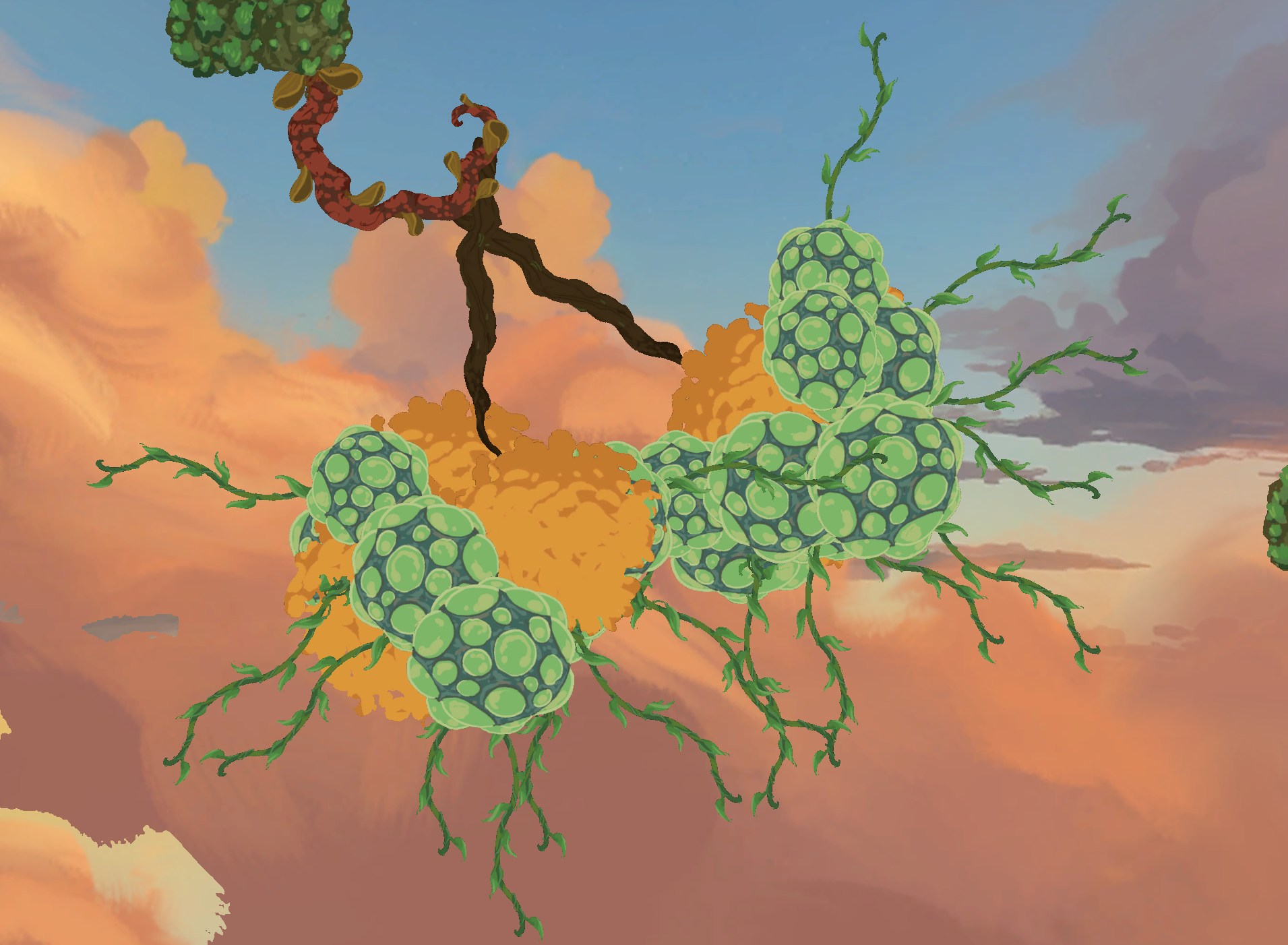 "(why did you do this to me, father?)"
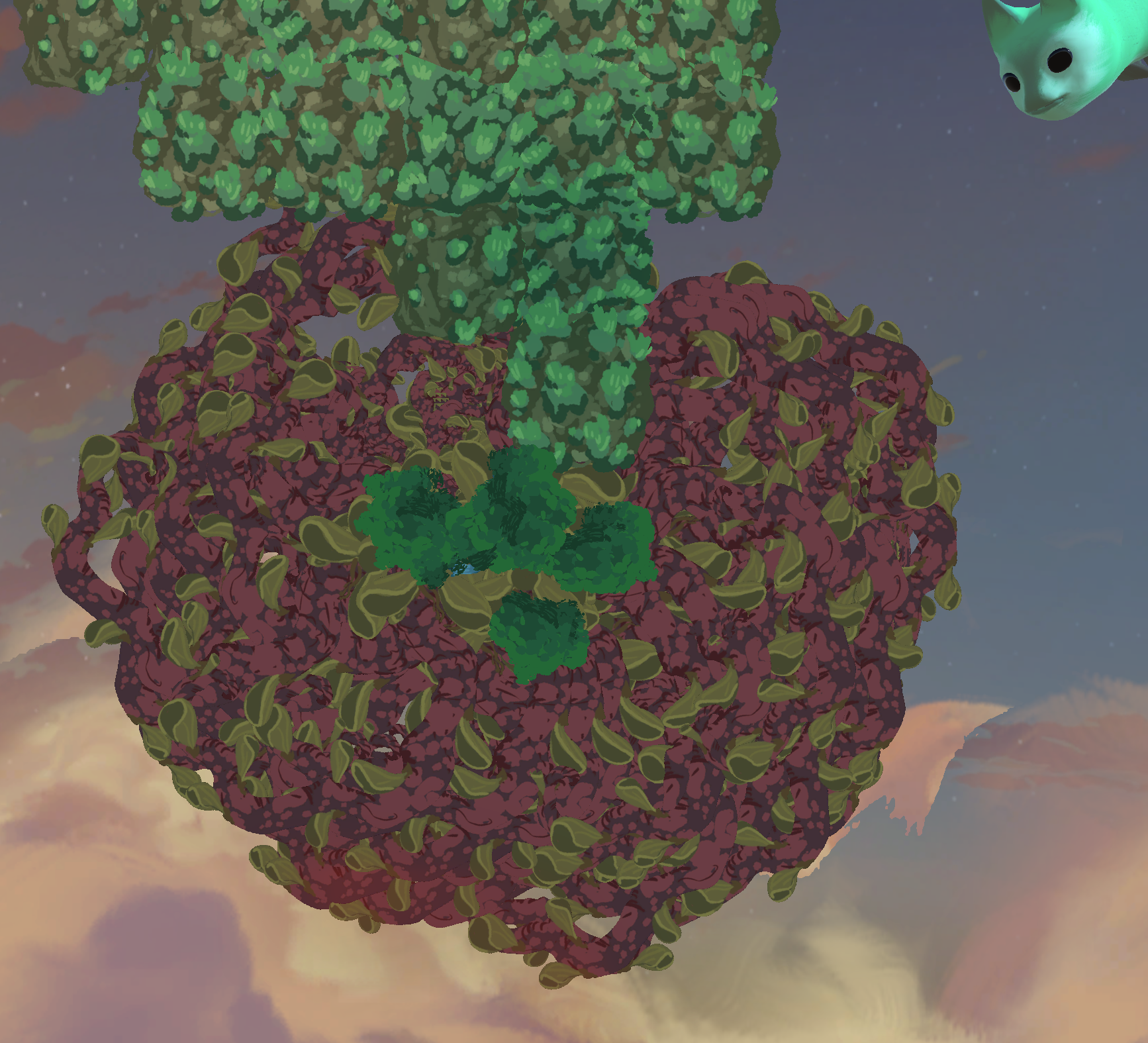 "(looks survivable!)"
Even though the process was a lot tougher than with Feed the Forest, I will salvage three positive things from this week’s prototype:
- The forest God™ was an awful piece to make quickly, but turned out great. I was sore about doing assets in 2D, so having the chance of producing a main 3D asset was relieving. The model was a simple subdivided / mirrored cube, which meant I had very quickly topology issues with the face, which I merely covered up with googly eyes. Once that was done, textured painted it with Ucupaint, and made an armature with the idea of having it follow the head position (head propagates to the rest of the bones, therefore head bone is the main bone, and all other bone chains are directed outwards, not what you would normally do if you wanted to easily animate this creature). This worked nicely with wiggle bones, and translated quite well into Godot’s Springbones, and in Unity to Fimpossible creations TailAnimator component (configurable joints should also be able to give you this effect, or script)
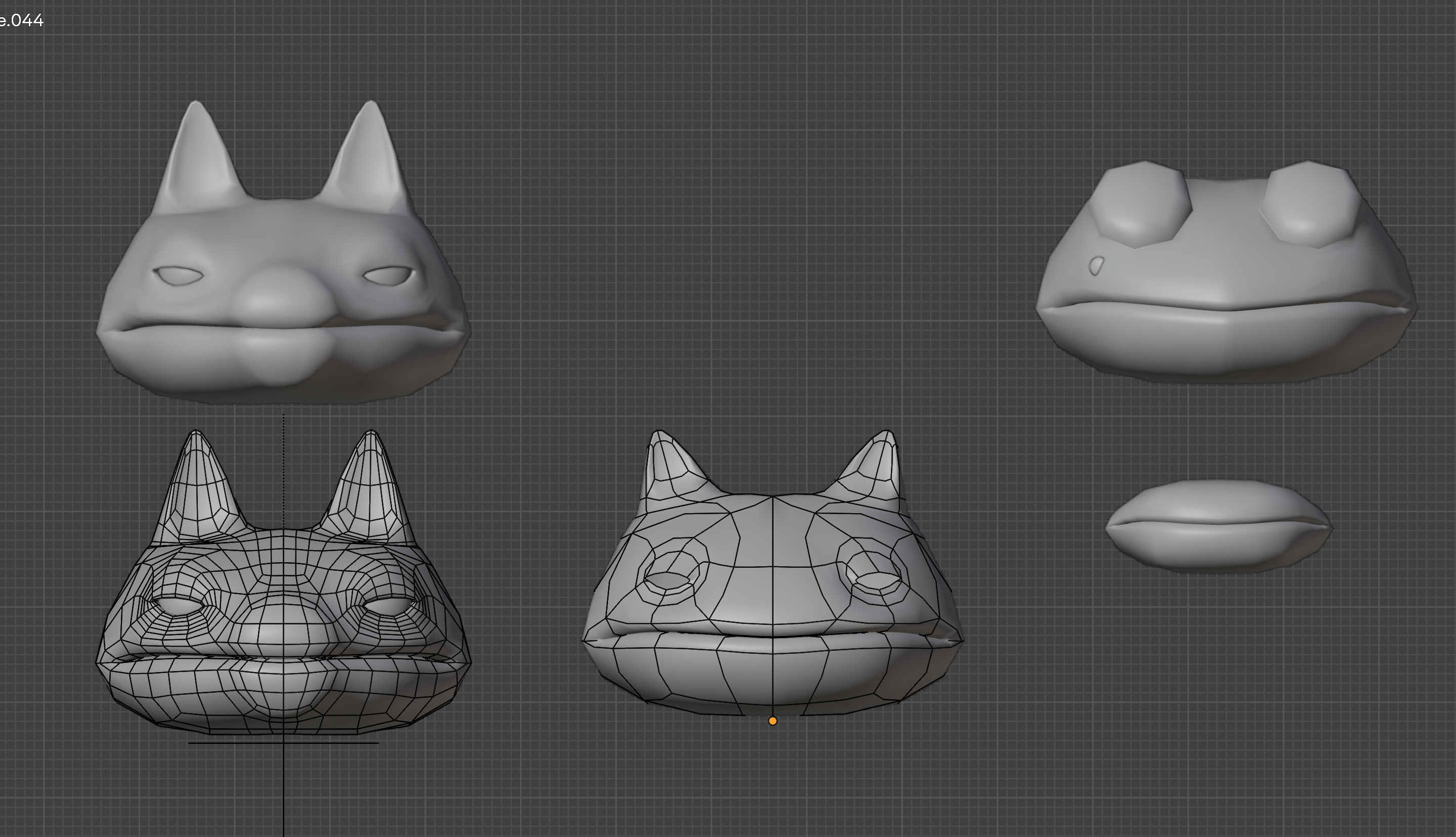 (Initial model was just the face, all dorky and weird)
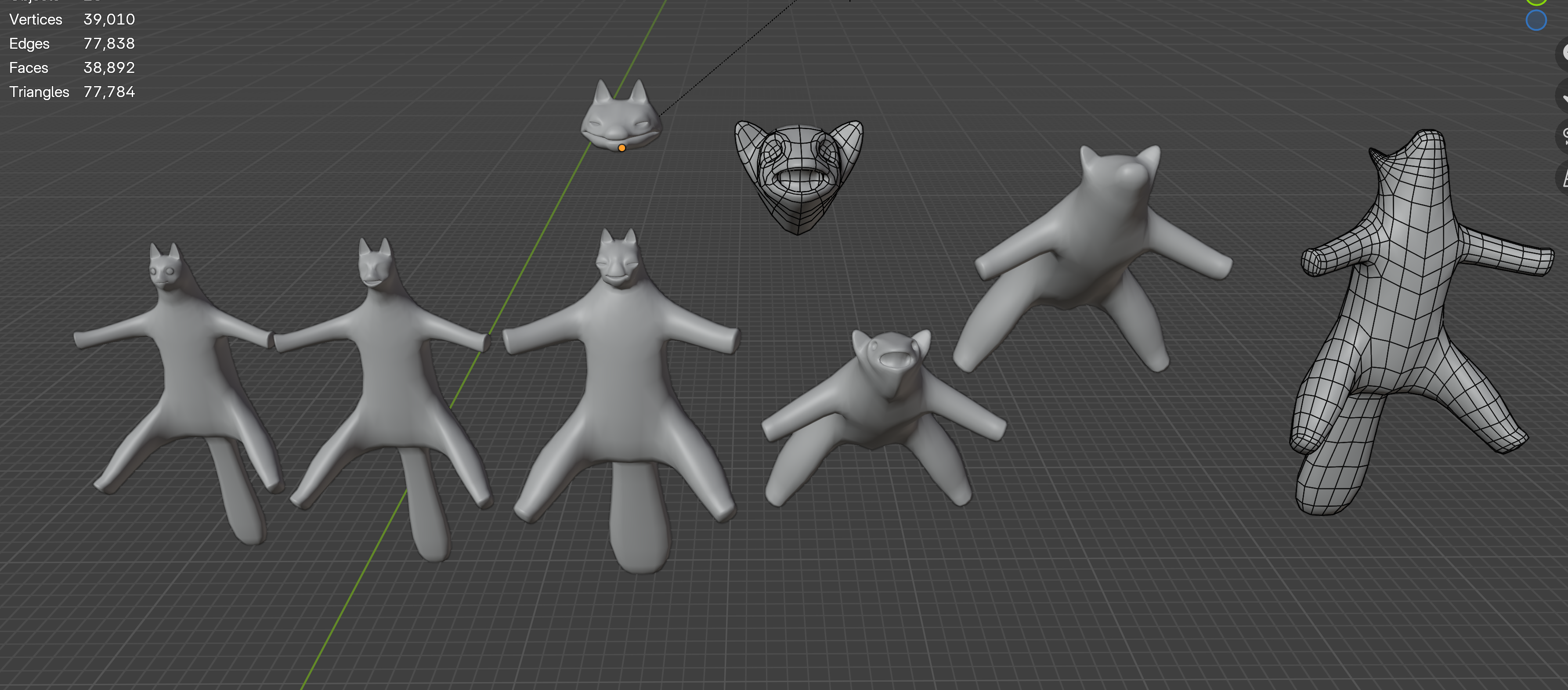 (Full body started simple, face was messed up, stitching previous head was even weirder, and it somehow came together with googly eyes. Progress is right to left)
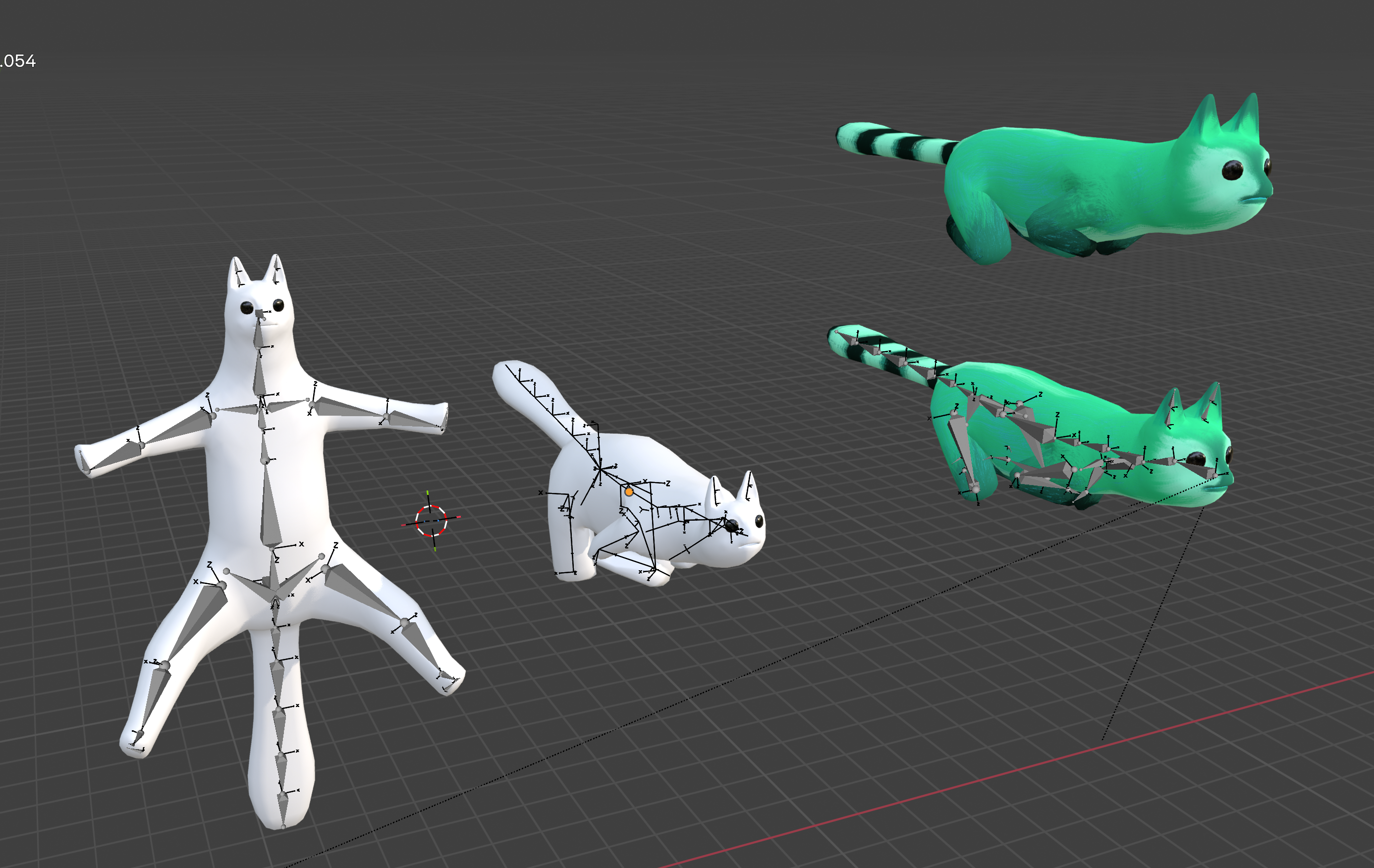 (Here progress is left to right: from the initial armature bind, there came a base posing, deciding on the approach with reversed chain direction to make everything depend on the head, and the texturing)
(Wiggle bones test in blender that convinced me that we could use this instead of animations)
(Godot toy adaptation made with spring joints)
Implemented version in the game, made with Tail Animator v.2
- Even though I made most assets in Krita, Blender was still a worthy laboratory to test things out, and I began the setup for a tile-tool, that would spawn instances of simple textures around the tile space, based on proximity with a controller (to create gradients, fadings), and hopefully begin giving ideas on how to spawn ornaments, variations, and extra pieces to make tiles more organic. I do think that this sort of tool might end up being the most useful directly in the engine, but creating the base in blender definitely helps me understand what am I needing, and what sort of control would I be interested in. This is by no means done, nor even properly tested, but I will definitely come back to it to see how well I could make variations with it.
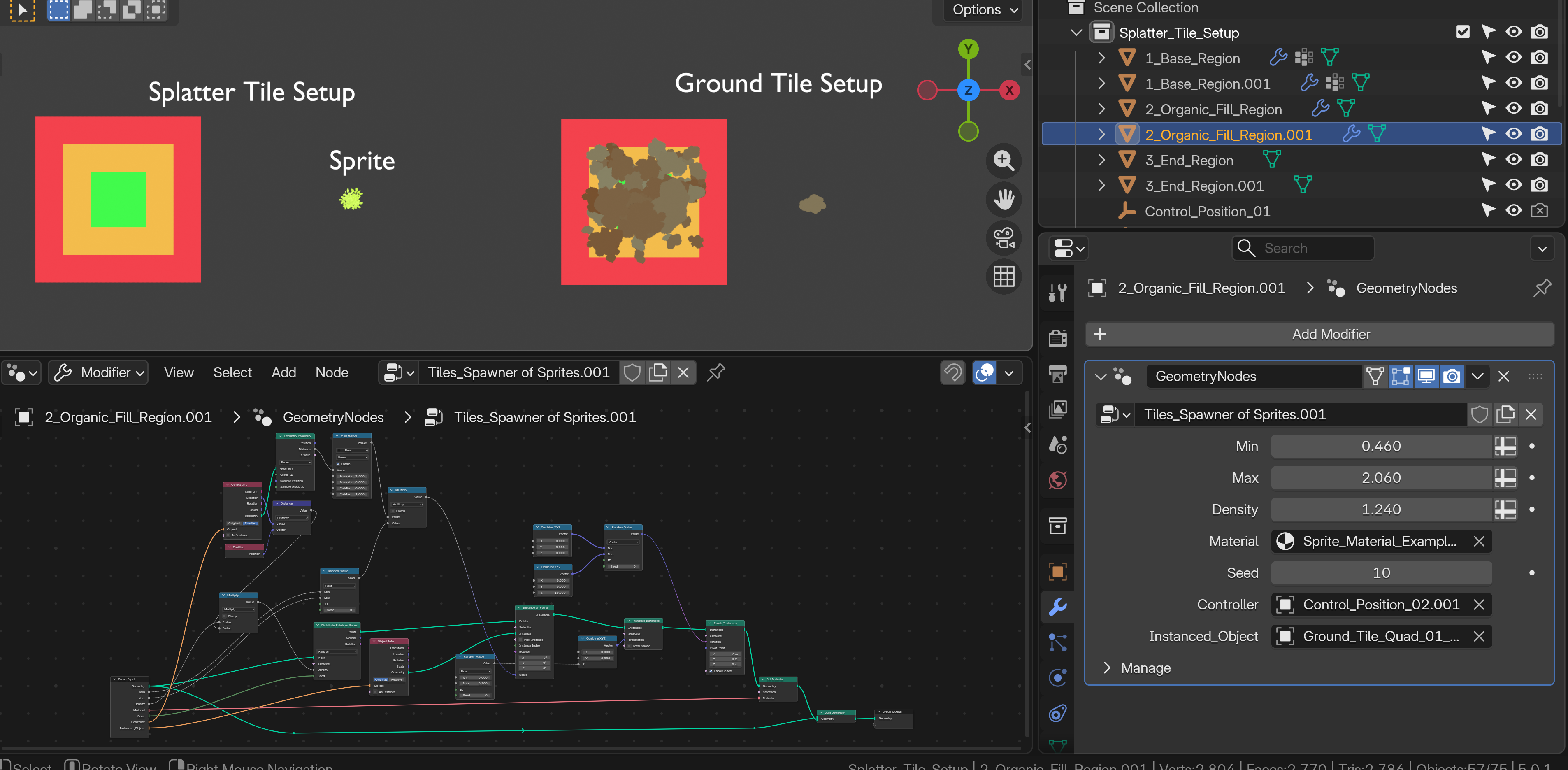 (Blender Geo nodes setup for instancing sprites over splatter-tile areas to create variations)
- Finally, an easy and well researched bottleneck which I always recommended to students, but I hadn’t personally suffered from, texture atlases! Out of the process of making vegetation assets, sending them to Unity, making materials for each asset texture, very quickly it became obvious that those 20 materials were having too much in common to justify having all of them (with subsequent drawcalls), and putting everything into a texture atlas, adjusting the UVs and reducing the materials to a single one was a satisfying realization. Still to be implemented properly, and surely explored further, but already a piece of experience that I will come back to.
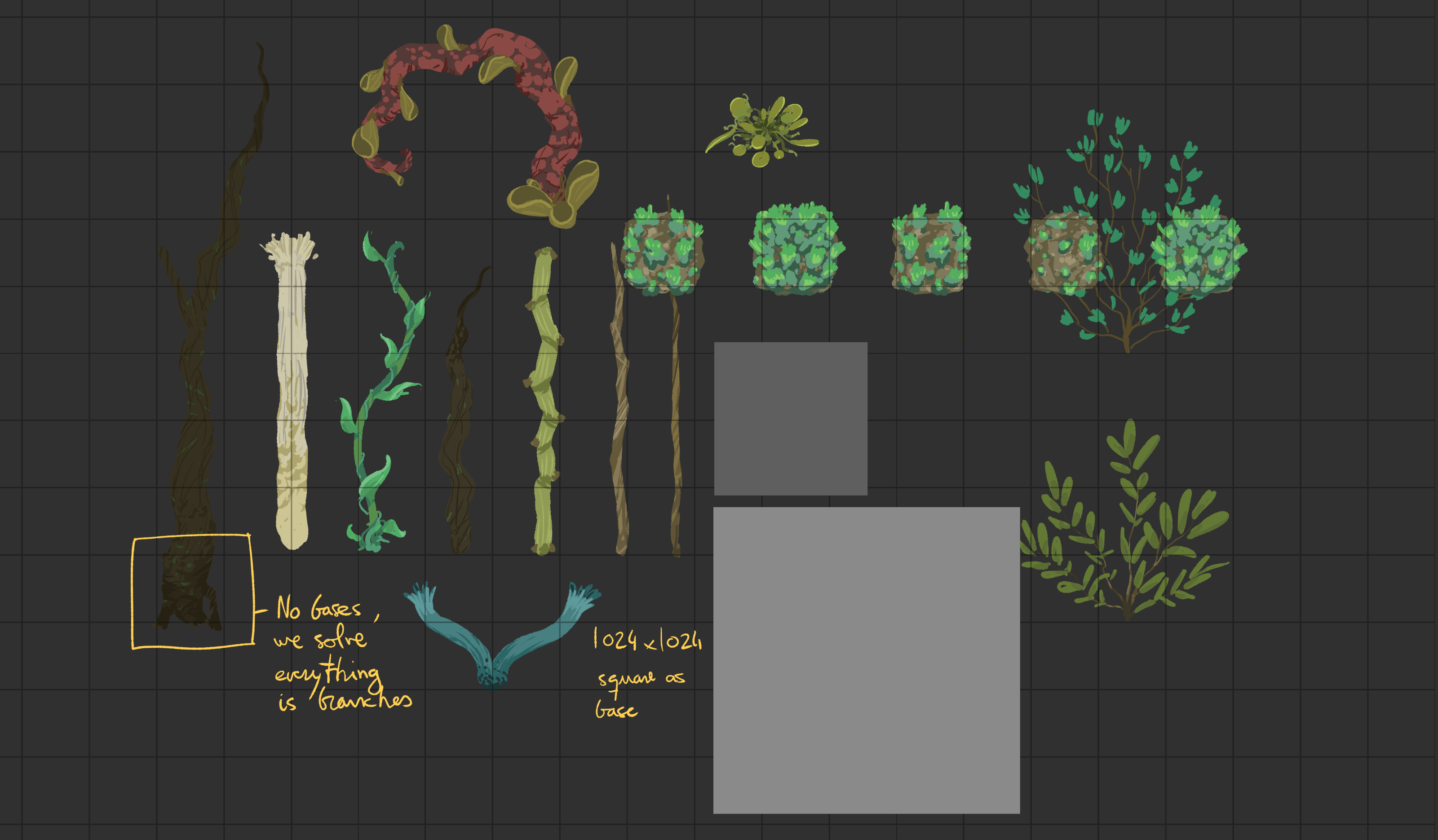 (initial Krita workshop space where vegetation assets were created)
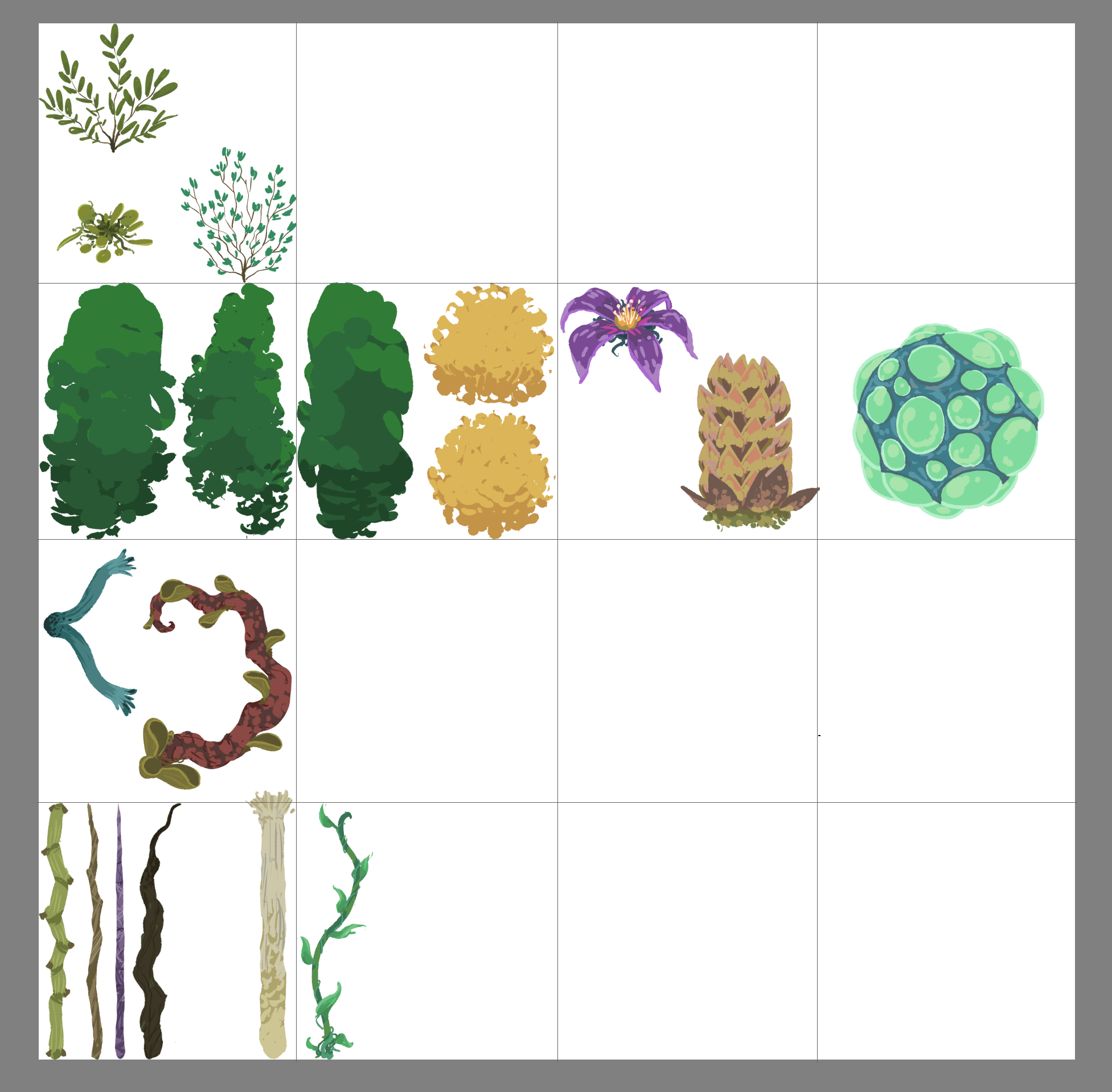 (eventual arrangement into an atlas that, along with UV placing in blender, would reduce the total amount of materials from 15-20 to 1)
- Something derived from that same texture atlas optimization process is a shader I made along with Edd in Amplify shader to randomize the texture displayed by ground tiles, from a tiny 4-cell atlas, based on a noise texture.
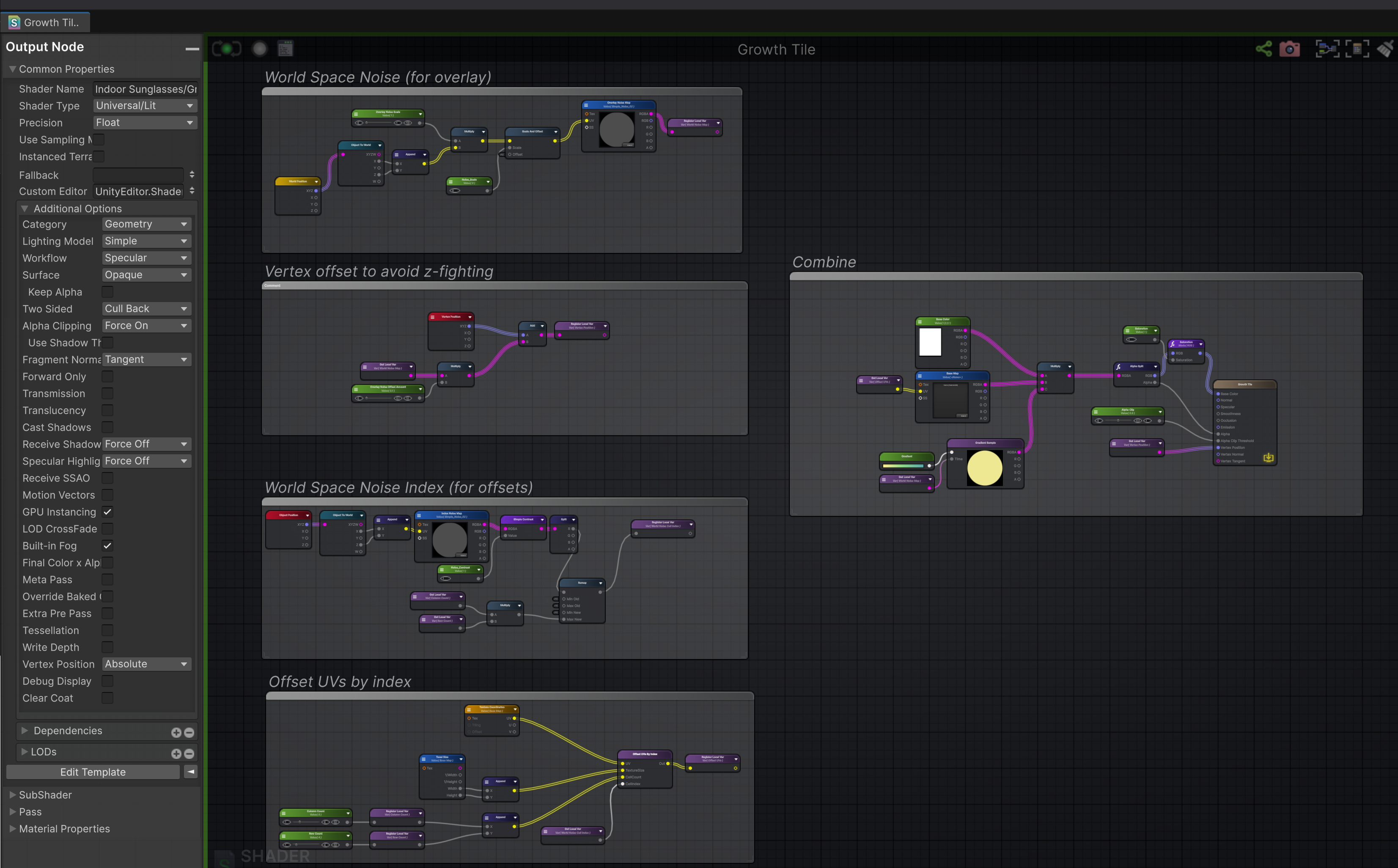 (Edd’s beautiful arrangement of nodes in the shader)
(actual look in the editor, where position changes their tint and the texture they showcase)
Please do try the prototype, and if you do, feedback is greatly appreciated. This time around I am first writing the entire thing not to rely on my future self keep writing updates to the initial thread. Hopefully that will make things easier. <3
Until the next one,
Acre